
32. Exemplary Salvation Experiences (Part II)
- Tom

- Nov 22, 2025
- 8 min read
Jesus’ Example
The Lord Jesus lived an exemplary life. We should imitate everything he did. For example, he was baptized so we should be baptized too.
Jesus got baptized for a reason, and so do we. In fact, we get baptized for the same reason! Jesus got baptized to get the gift of the Holy Spirit. We too should get baptized if we want the gift of the Holy Spirit. He didn't experience the baptism of the Holy Spirit until he got baptized in water, and that's the way it works for us too.

Just as Jesus was in the flesh—the human nature of sin—so are we now. We have weakness, the same that he had when he was born. We have the same weaknesses Jesus had all throughout his life, until the day he died. Just as Jesus needed the power of the Spirit when he was in the flesh, so do we need the power of the Spirit today--that’s the main reason why we get baptized!
To Fulfill All Righteousness
Our Lord came to John the Baptist for baptism, and John tried to stop him. The Bible says that 'John tried to prevent him.' Wow. John tried to stop Jesus from being baptized! But Jesus said that it had to be done. Jesus said that he had to be baptized to fulfill all righteousness. What he meant was that he had to be baptized to do everything the right way. Fulfilling righteousness is doing things the right way.
Pay close attention to Jesus' expression in the passage we're about to read where he argues for his own baptism by saying that ‘… it is fitting for us to fulfill all righteousness.’

Here's the passage:
… Jesus arrived from Galilee at the Jordan, coming to John to be baptized by him. But John tried to prevent him, saying, ‘I have need to be baptized by you, and do you come to me?”
But Jesus answering said to him, “Permit it at this time; for in this way it is fitting for us to fulfill all righteousness.’ Then he [John] permitted him.
And after being baptized, Jesus went up immediately from the water; and behold, the heavens were opened, and he saw the Spirit of God descending as a dove, and coming upon him… (Matthew 3:13-17; NASB)

Baptism is doing things right. It's the fulfillment of righteousness. It’s the right way to get started in the Christian Faith.
But why is baptism fundamental? Well, baptism is a basic initiatory rite in Christianity because each of us needs the Holy Spirit. We don't have him living within us prior to baptism. To get the Holy Spirit, we must be washed of our sins. Our washing is our baptism.
So, when Jesus got baptized, he did it to guide us. He was showing you and me how to get the baptism of the Spirit. He was modeling that for us. He was demonstrating the right way to get the Holy Spirit.

Exemption Not Avoidance
John the Baptist was correct when he said that Jesus was exempt from baptism--but only in the legal sense. John was correct in the sense that Jesus didn’t have any sins to be forgiven. However, Jesus lived for a higher purpose. He didn't only do the things God required of him.
The Father assigned Jesus the task of showing you and me how to attain eternal life. Therefore, Jesus got baptized and became the example God asked him to be. Jesus got baptized to show you and me that we must be baptized. He did not do it for himself.
Now that Jesus has subjected himself to this ritual, we know what we must do. The same!
With Jesus’ example presented to us in the Bible, now there’s no excuse. There’s no woman or man who can exempt themselves from baptism. If the Messiah Himself got baptized, who dares exempt themself? Who dares to disregard the Lord’s example? Are any of us greater than Jesus Christ?

Acts
It’s absurd to believe that today’s Church has a more refined approach to evangelism that the first Church. You hear pastors speak of how in the first centuries “theology hadn’t quite developed yet.” Although they won’t say it out loud, implicit in their statement is the belief that Jesus and the Apostles never established a model for us. They don’t think that the Book of Acts is an example for the Church moving forward.
But it is. The events which took place 2,000 years ago guide us. And they are recorded for us faithfully in the Book of Acts. Study them. Look at their ways. From the time of the Old Testament prophets God has told us to seek the ancient paths. Jeremiah 6:16 says:
Stand at the crossroads and look; ask for the ancient paths, ask where the good way is, and walk in it, and you will find rest for your souls.

The right approach to establishing, structuring, and organizing a new church is to go back to the beginning. You’ll know what to do if you ‘ask for the ancient paths.’ We need first principles. We need foundations. We need rudimentary truths and elementary examples.
There’s this notion floating around in people’s minds that the Church has advanced throughout the ages. People think that the Church has been in a constant state of development since its inception. But that is untrue. There has not been progress for the Church. The Book of Acts remains the gold standard. It has always been the model for Christian churches.
Supposed Progress
Most Christians are deceived. They think that the Book of Acts is archaic. It’s outdated. They say that the things the Apostles did in Acts had not yet “evolved” into the Church activities and theologies we have today--and that with the help of the Internet, we're headed towards a revival. They have a vain hope in doctrinal advancement and progress in our practice.
But there hasn't been any advancement or progress. In fact, it's been quite the opposite. The Church has slipped away from its original course.
According to these churches, the Church’s doctrines and practices as witnessed by Luke in the Book of Acts had not yet been perfected by:
Athanasius (who gave us the Trinity)

Augustine of Hippo (who invented the doctrine of original sin)

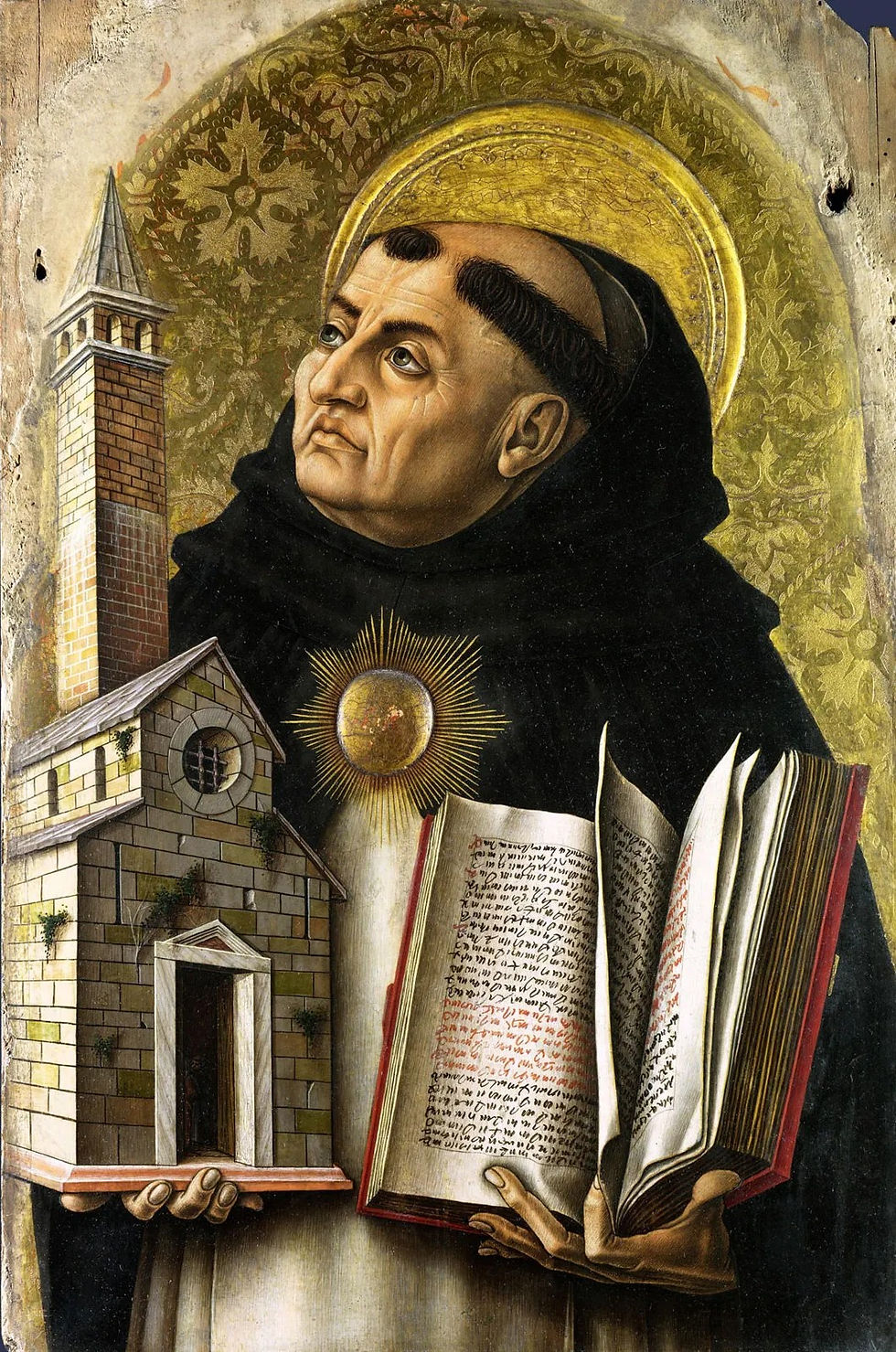
Thomas Aquinas (who wedded theology with philosophy)
Martin Luther (who declared that salvation is by “faith alone”),

or, Billy Graham (who replaced baptism with the altar call).

For the great majority of pastors, the Trinity, original sin, philosophy, faith alone, and the altar call are all very significant developments for the Church. They are theological developments which today’s churches take pride in—and they (supposedly) prove that today’s churches have progressed from what it once was.
Because of the doctrines of the Trinity, original sin, and faith alone, Christians are more than what we were at the time of the Primitive Church, they say.
The theory is that now in the 21st century, because we have the Internet, digital financial systems, cars, planes, and even cell phones, we are more advanced than the First Church. To put it more directly, the great majority of pastors have the gall to lead their people to believe that the Church pastored by the Twelve Apostles didn’t have what we have today.
Well, they’re wrong. They’re very wrong.

Which Model is Best?
Let's combat this false narrative. Let's encourage every Christian to ask himself: “What model should my church follow?”
Ask Christians that question and wait for an answer. You'll find some very interesting ones. For example, you might not have known it, but there are plenty of people who think that John Calvin should be included on the list with Athanasius, Augustine, and Luther. What will those people--they're called Calvinists--say? They will argue for a Puritan model.
The Puritans were devote Calvinists, and there are many churches which follow Calvinism today. Some of them use the Puritans as their model. I've been to churches where if you're not a Calvinist, you're a heretic. Their pastors preach on the sovereignty of God all the time, and they're very proud of it.

The Jehovah’s Witnesses think that we should follow the model of their founder, Charles Taze Russell. The Mormons follow the example of their founder, Joseph Smith. Other Evangelicals are strict followers of a man named William M. Branham. They revere him as a prophet and will not question the truthfulness of his teachings.
So then, who is right? Who can tell us what the right model for the Church is?
In Israel, New York, and many cities in Latin America Christians are committing to the Messianic movement. They keep a Saturday sabbath and act like Jews even though they are from a Gentile background. They keep the Jewish holidays and discuss the teachings of rabbis. They only eat kosher food, and will only use the Hebrew Yeshua to refer to our Lord Jesus.
That's the model for them: act like Jews. Their model is Judaism. That tends to be very dangerous doctrinally since Jews approach God through Moses, and not through Christ.

Techies
Then there are those who believe that technology has much to offer the Church. They promote the virtual model—the so-called “online church.” You may never meet any of these people because they spend most of their time at home in front of their computer. LOL.
They miss out on a lot of God’s design for the Church because their church offers no laying on of hands, practices none of the gifts of the Holy Spirit, and does not experiment with anointings. Dry? Yes. So dry that the Holy Spirit cannot hardly find a way to penetrate their human-engineered environment.

The techie-Christians obviously do not lay hands on people for healings or experience authentic fellowship--they can't! They're not close enough to one another. They separate themselves from one another with a wall of fiber optics and satellites. And that's exactly what most people in these churches are trying to avoid--transparency and nearness to one another.
Jesus camped out with his disciples every day and walked with them for hours at a time. They ate, drank, bathed, slept, and worked together daily. Fellowship has immense value in Christ's economy.

Many congregations committed to the Purpose-Driven Model in the 1990s. They transformed the old musty church regimen into something more suited to modern culture. Churches got a facelift. But it wasn’t a deep change. It was only a superficial one.
At the same time Hillsong music got popular and a big chunk of 90% of Evangelical Sunday services began to revolve around worship music. Churches adopted a “seeker friendly” approach to preaching, fellowship, and worship. That’s when the mega-churches arose with a health, wealth, and prosperity message which became very popular in the Americas and Africa.
Trends, Trash, and Timelessness
Nonetheless, whatever wind of doctrine (Ephesians 4:14) churches follow, and whatever pastor they obey, they will regret having turned away from the Biblical model. Their biggest problem is their pastors do not follow principles. Their pastors follow trends. The pastors do not follow the Holy Spirit, but popularity.
But you cannot pursue fame and fortune and still serve Christ.

All the church models we just mentioned belong in one place--not in your church but in the trash can. We need to renounce them immediately. We must turn our backs on them today. If you and I wish to be worthy of being called the Church, we have to turn towards the model God gave us in Acts.
There is no other option: We need to adopt the model of the first Church. It's the only Biblical model. It's the only one whose design is inspired by God.
Christians have been very mistaken about the right pattern for Church life. So let's reverse the trend. First, we need to stop thinking that the times in which we live are so advanced that the examples of Christ, the Apostles, and the Primitive Church have become outdated.

They have not become outdated. The model of the Early Church is timeless. Now more than ever, we must apply their pattern of behavior to our own activities because God's people need a strong Church. We need a strong Church like children need a strong mother. We can't do without it.


Comments