
36. Jesus Proceeds from God (Part VI)

Source of Strength
The Pharisees denied that the source of Jesus’ strength was God. They ignored his prayer life, denied his love for God, and would hear nothing of his expression: ‘I am in the Father and the Father is in me’ (John 14:11).
Any time the Lord Jesus spoke of his relationship to the Father, they would get edgy. In fact, it was a topic that annoyed them so deeply, that it drove them to anger, wrath, and eventually homicide! They crucified the Lord.
Today we'll consider four encounters the Pharisees had with Jesus in which his relationship with the Father angered them deeply.

Seven Unique Circumstances
But first, let's consider how prevalent the "God loves Jesus" theme is in the Bible. In seven scenarios the Bible reports to us that God loved Jesus. Different versions of the "God loves Jesus" message are repeated in different contexts in the New Testament.
Here are those contexts:
The confrontation with the Pharisees (for today's study) where Jesus declares ‘the Father loves the Son’ (John 5:20).
Jesus' Good Shepherd allegory in which he explains 'For this reason the Father loves me, because I lay down my life' (John 10:17).
The Vine and the Branches parable when Jesus stated 'Just as the Father has loved me, I also have loved you' (John 15:9).
In Jesus' High Priestly Prayer to the Father he highlighted '... for you loved me before the foundation of the World' (John 17:24).
The Father declared from Heaven Jesus to be his own 'Beloved Son' at the baptism of Jesus (Matthew 3:17, Mark 1:11, Luke 3:22).
The Father audibly deemed Jesus 'my Beloved Son' when he transfigured him and gave him glory (Matthew 17:5, Mark 9:7, Luke 9:35).
The Apostle John's 3rd person commentary observes 'the Father loves the Son' (John 3:35).
1. The Reason for Homicide
Since for someone today to claim to be loved by God sounds unoffensive, even naive, how could Jesus' declaration that God loved him possibly have offended the Pharisees? It sounds so innocent--almost childlike. Well, it offended them because it was not a sentimental statement. It was, as they rightly interpreted it to mean, a claim to authority.
Jesus was not acting childish when he declared God's love for him. Rather, he was speaking like a Prince. He spoke with the confidence of a prince certain of his king-father's trust, support, and backing. Jesus spoke like an heir. Is not every prince an heir of his father's kingdom?
The Scriptures present the situation this way:
For this reason they tried all the more to kill him; not only was he breaking the Sabbath, but he was even calling God his own Father, making himself equal with God.

Jesus gave them this answer: ‘Very truly I tell you, the Son can do nothing by himself; he can do only what he sees his Father doing, because whatever the Father does the Son also does. For the Father loves the Son and shows him all he does…
Jesus went on to state:
... the Father… has entrusted all judgment to the Son, that all may honor the Son just as they honor the Father. Whoever does not honor the Son does not honor the Father who sent him (John 5:18–23).
You’ll note that Jesus never backed down. He never lightened up his rhetoric. He loved to speak of his relationship with God because it truly was the foundation of his ministry, purpose, and power. God had his back!

Jesus constantly dropped hints that he was the Son of God to the Pharisees, mostly because they hated him. Do you tell your enemies that you’re blessed? Give it a try, and you'll see how much it bothers them. One thing they cannot accept is that you might be supported and sponsored by God.
The Pharisees were offended by the logic of Jesus' claim to Sonship. They understood that if the Messiah is God’s "Chosen One," then anyone who rejects the Messiah rejects the God who sent him! Regardless, they rejected Jesus and they rejected him in the most severe manner—‘they tried… to kill him.’
The reason behind their homicidal intentions? ‘He was… calling God his own Father.’ And yes, for them, that was extremely offensive.
Now that you see that the Pharisees hated Jesus because of his claim to a close relationship to God, be ready for your claim to God's blessings, including inheriting the Kingdom, to cause your enemies to hate you as well. In fact, many so-called "Christians" can't bear talk of the Kingdom.

2. Getting Cocky
Then there was another situation, one in which Jesus declared he “stood with” the Father. Such a declaration was unacceptable to the Pharisees. So, with pompous posturing, they responded sarcastically to Jesus and said ‘Where is your "Father"?’ Can you try saying that with "Father" in a sarcastic tone? Try it.
Although such a reaction to Jesus’ declaration that the Father sent him was very cocky, Jesus stood strong. In spite of their contempt, he had the confidence and the boldness to rebuke them. And the basis on which Jesus rebuked the Pharisees was this: That they did not know him or the Father!
‘… if I do judge, my decisions are true, because I am not alone. I stand with the Father, who sent me.

In your own Law it is written that the testimony of two witnesses is true. I am one who testifies for myself; my other witness is the Father, who sent me.’
Then they asked him, ‘Where is your "Father"?’
‘You do not know me or my Father,’ Jesus replied. ‘If you knew me, you would know my Father also’ (John 8:16–19).
Those Pharisees got (very much) roasted! Jesus left them speechless--and for them to be quiet was a rarity.

3. Tough Talk
On another occasion, Jesus gave the Pharisees some tough talk he characterized as ‘the truth.’ His goal was to prove to them that they did not belong to God. So, the Lord Jesus told the Pharisees very directly and in no unclear terms that they were children of the Devil.
Now, with that tough talk, our Lord painted a big contrast between them and himself. He was from God. They were from the Devil. Pretty bold, huh? Well, don't take my word for it, here are Jesus' exact words:
If God were your Father, you would love me, for I have come here from God. I have not come on my own; God sent me.
Why is my language not clear to you? Because you are unable to hear what I say. You belong to your father, the Devil… the father of lies. Yet because I tell the truth, you do not believe me!

Can any of you prove me guilty of sin? If I am telling the truth, why don’t you believe me? Whoever belongs to God hears what God says. The reason you do not hear is that you do not belong to God (John 8:42–58).
4. To Stone Jesus
The Pharisees couldn’t bear hearing Jesus claim God as his Father. Neither could they tolerate hearing him claim unity with God. His statement ‘I and the Father are one’ drove them to threaten Jesus with stoning.
Still, Jesus insisted that his miracles (he called them his ‘works’) proved that he was sent by God. His reasoning was that who else but God could do those supernatural feats through him? They were too wonderful for a human being in the flesh of sin to perform.

Jesus would not deny his sonship, he would not deny his unity with God, and neither would he deny that in spite of being a man, he was going to be Divine. In fact, to overcome their unbelief, Jesus proved through the Scriptures that the promise of being divine children of God was extended to them as well.
‘The works I do in my Father’s name testify about me, but you do not believe because you are not my sheep… My Father, who has given them [the sheep] to me, is greater than all; no one can snatch them out of my Father’s hand. I and the Father are one.’
Again his Jewish opponents picked up stones to stone him, but Jesus said to them, ‘I have shown you many good works from the Father. For which of these do you stone me?’
‘We are not stoning you for any good work,” they replied, “but for blasphemy, because you, a mere man, claim to be God.’
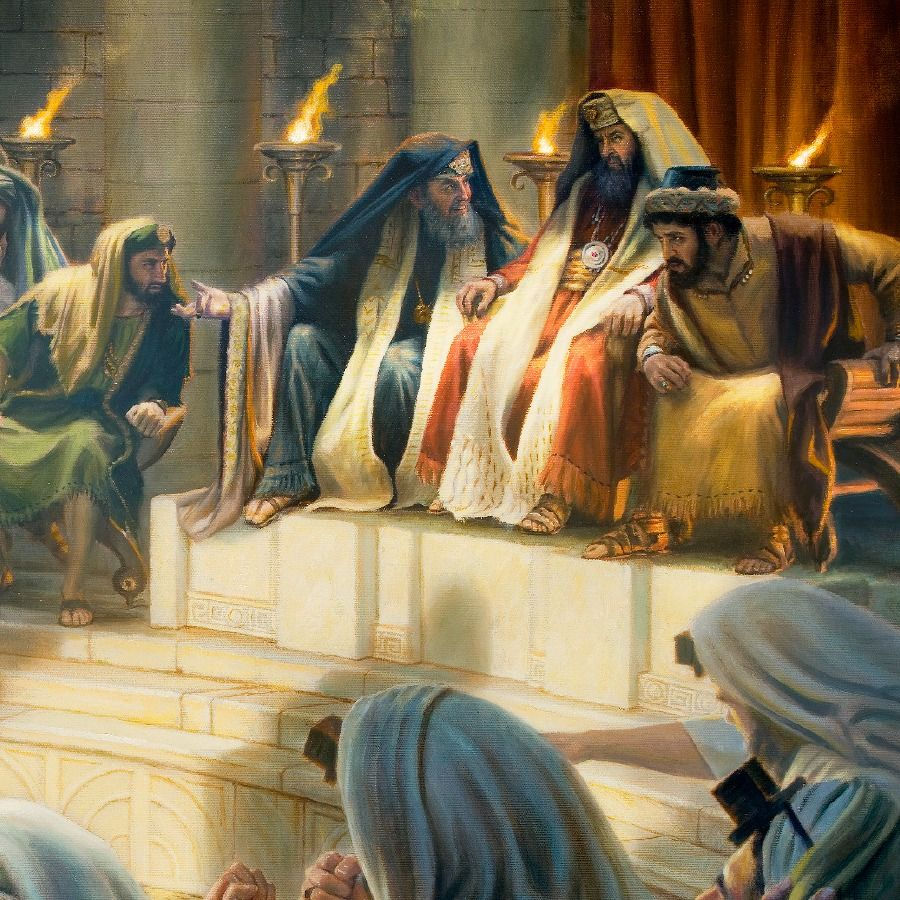
Jesus answered them, ‘Is it not written in your Law, ‘I have said you are gods?’ If he called them gods to whom the word of God came—and Scripture cannot be broken— what about the one whom the Father set apart as his very own and sent into the World? Why then do you accuse me of blasphemy because I said, ‘I am God’s Son’?
Do not believe me unless I do the works of my Father. But if I do them, even though you do not believe me, believe the works, that you may know and understand that the Father is in me, and I in the Father (John 10:25–38).
Back to the Beginning
And the theme of this last passage brings us right back to where we started. Remember what Jesus said to the Apostles in John 14:11? It was our first passage in lesson #25. In it, Jesus said to his Apostles:
Believe me that I am in the Father and the Father is in me; otherwise believe because of the works themselves.

Well, Jesus used the same wording he used for the Apostles to counteract the unbelief of the Pharisees. He used the exact same wording for two groups that were polar opposites. How is that possible?
Just as he told the Twelve Apostles, Jesus also told the Pharisees that they needed to believe in his relationship with the Father. And he said the same thing to both groups: that they needed to believe in the Father-Son relationship if not on the basis of what he said, then at the very minimum on the basis of the miracles God did through him.
It's worth repeating. Here’s what the Lord said to the Pharisees:
Do not believe me unless I do the works of my Father.
But if I do them, even though you do not believe me, believe the works, that you may know and understand that the Father is in me, and I in the Father (John 10:37–38).

And you?
So, we’ve looked at the faith of the Apostles and the faith of the Pharisees. Now, what about you? Do you believe in Jesus’ words, or must you see his works? Either way, whether you believe by words or works, you must trust that the relationship Jesus had with his Father is the model relationship. You must see it as the purest form of love.
The Universe revolves around that relationship. It shows us how God treats his beloved child, and how God’s children must treat their beloved Lord Jesus. Why are there so few people interested in studying the relationship between Jesus and his Father?

Jesus obeyed his Father with utter subordination. Do you believe that? If you do, then you’ll live in subordination yourself. You’ll let Jesus’ submissiveness become the guiding principle of your own life. And that’s what Jesus intended to teach when he encouraged people to believe in his relationship with the Father.
But now that God resurrected Jesus from the Dead, Jesus commands us to submit to him the way he submitted to God. Because God has given him all authority, Jesus had the boldness to say to his disciples:
You are my friends if you do what I command you (John 15:14).
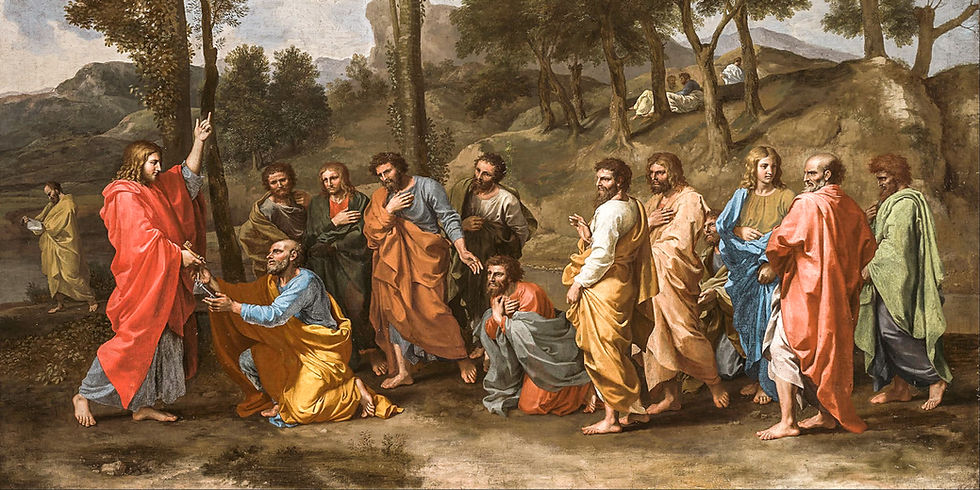
The Lord Jesus
So, in conclusion, Jesus submitted to God, and for that reason we now submit to him. He told his disciples to do the things he commanded them. He told them then, and he tells us now to obey!
Our relationship to Jesus is a subordinate relationship. We are lesser and he is greater. As he related to God from a position of subordination, so must we relate to Jesus from a position of subordination. We subjugate ourselves to him because Jesus has become our Lord—and “Lord” means boss!
Now you can understand Peter’s emphasis on what God did in Jesus, and what it means to us, when he declared to the Jews:
… let all Israel be assured of this: God has made this Jesus… Lord… (Acts 2:36)

This doesn’t only mean that God did something miraculous to help Jesus. He did. He resurrected him. But it means something very relevant and applicable to us: that we must honor, obey, and submit to Jesus. God made him Lord of all!
Peter declared this very truth to Cornelius’ household, saying:
Jesus Christ—he is Lord of all (Acts 10:36; NASB).
Paul likewise understood the logic behind Jesus’ lordship when he made these two comments:
… to this end Christ died and lived again, that he might be Lord both of the Dead and of the Living (Romans 14:9; NASB).

And…
… God highly exalted him… so that at the name of Jesus… every tongue will confess that Jesus Christ is Lord… to the glory of the Father (Philippians 2:9–11; NASB).


Comments