
57. Polycarp on the Trinity (Part II)

A Brave Man
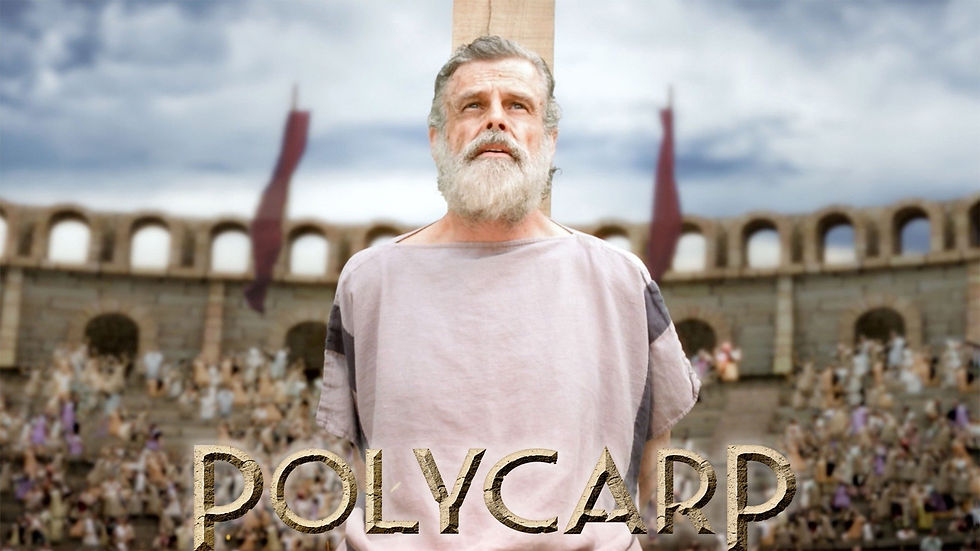
The aged Polycarp served the Lord Jesus Christ from his youth. Although the Roman proconsul who officiated his execution promised release, and assured Polycarp that if he would renounce Christ, he would avoid the flames, Polycarp refused the offer. Instead of saving his life, he boldly responded:
For 86 years I have been his servant, and he has done me no wrong. How can I blaspheme my King who saved me? (Martyrdom 9:3)

Polycarp’s courage was inspired by a love of Jesus, and by Jesus’ example. The Lord too acted valiantly in the face of an unjust politician, Pontius Pilate. Let’s recall how cool and collected Jesus was the day he was crucified. The Scriptures tell us:
Pilate said to him, Are you not speaking to me? Do you not know that I have authority to release you, and I have authority to crucify you? Jesus answered him… ‘the one who handed me over to you has the greater sin’ (John 19:8–11).
Polycarp used that same boldness confronting the proconsul regarding God’s judgment. Did you notice how Jesus spoke to Pilate of a ‘greater sin’? Well, just as Jesus indirectly stated that Pilate was sinning with his comment on differing degrees of sin (to prick his conscience), Polycarp directed his speech to the proconsul’s conscience.

He established an awareness of the fire of God’s judgement by saying:
You threaten with a fire that burns only briefly and after just a little while is extinguished, for you are ignorant of the fire of the coming judgment and eternal punishment, which is reserved for the ungodly.
But, why do you delay? Come, do what you wish (Martyrdom of Polycarp 11:2).
Faith in Jesus as God
No one can doubt that Polycarp had faith in Jesus—lots of faith. But what about his doctrine? Let's not just acknowledge his faith, but recognize that Polycarp’s actions demonstrate the Faith of the Apostles, because they do. His words and actions model sound doctrine.

Let’s note that of his Lord Jesus Polycarp spoke when he prayed for unbelievers, calling Jesus “our God.” You can see that here:
… may he [the God and Father of our Lord Jesus Christ] give to you a share and place among his saints… and to all those under Heaven who will yet believe in our Lord and God Jesus Christ… (Philippians 12:2)
Did you catch it? Polycarp called Jesus “our Lord and God.” He used the expression in the same breath with which he identified the Father as the One God. This recognition of Jesus as Divine was sandwiched between Polycarp’s mention of “the God and Father of our Lord Jesus Christ” and an encouragement to believe in Jesus’ “… Father who raised him from the Dead” so there was never a doubt in his mind who the One God was.

Tradition of the Apostles
Now, does Polycarp’s pattern of speech sound familiar? It should. Polycarp spoke according to the tradition of the Apostles. They also called Jesus “God” in the New Testament—at least seven times. In fact, the Apostle Thomas used the same title Polycarp used for Jesus when he said:
My Lord and my God (John 20:28)
Compare that to Polycarp’s “our Lord and God Jesus Christ.” Similar, right?
This is apostolic. How do we know? Well, the Apostle John also notes that Jesus is the only begotten God (John 1:18), the Apostle Peter spoke of Jesus as our God and Savior, Jesus Christ (2 Peter 1:1), and the Apostle Paul calls him God blessed forever (Romans 9:5) as well as our great God and Savior (Titus 2:13).

The Father Says So
This may sound confusing, but professing Jesus as our God does not mean that we deny the Father’s rightful place as the One True God in any way. The Father himself calls Jesus “God.” The author of Hebrews reminds us of the time God did that when he writes:
But regarding the Son He [the Father] says, ‘Your throne, O God, is forever and ever, and the scepter of righteousness is the scepter of your Kingdom’ (Hebrews 1:8).
So, the Father says Jesus is God. If God says so, Christians must say the same. The writings of the Apostles are sprinkled with this acknowledgement of Jesus as our God, as you can see, and they frame it many times in the form of a “doxology”—an outburst of praise. Take note of that.
Likewise, with Polycarp’s declaration of faith in “our Lord and God Jesus Christ” there is an element of worship. There’s a sense of awe. We call Jesus God not so much in the theological sense as much as we do out of reverence and adoration.

Worship Jesus
We as Christians worship Jesus because he deserves it. Have you been able to reconcile that with the worship of our God and Father? If you haven’t yet, then learn today that the worship of the Father and of the Son are not mutually exclusive. They are complementary. This is so because the Father is the Source of Christ’s authority. Remember that? It’s the second tenet of Trinitarianism.
We worship Jesus because of what God has done in him. Since Jesus is the only begotten Son of God, the Heir of the Kingdom, God Himself, the Father, orders that Jesus be worshipped, saying:
… let all the angels of God worship him [Jesus] (Hebrews 1:6).

And, surely you’ve read this passage before:
You also, as living stones, are being built up as a spiritual house for a holy priesthood, to offer up spiritual sacrifices [that’s worship] acceptable to God through Jesus Christ (1 Peter 2:5).

God Gets the Glory
Do you get it? Doesn’t God get glory for what he did in Jesus? Of course he does. That’s what the Apostles explain over and over again, but most people cannot see it in the Scriptures because they’re blinded by bad theology.
Are you different? Can you see how God is glorified in Jesus in the following passage?
God highly exalted him [Jesus], and bestowed on him the name which is above every name, so that at the name of Jesus every knee will bow, of those who are in Heaven and on Earth and under the Earth, and that every tongue will confess that Jesus Christ is Lord, to the glory of God the Father (Philippians 2:9-11).
Do you get it now? If not, here's another passage which is easier to understand. We are instructed by the apostle:
Through him [Jesus] then, let us continually offer up a sacrifice of praise to God (Hebrews 13:15).

Wise Men
So, now you see that we worship Jesus to the glory of the Father, who exalted him. We’re not the first to discover this principle. Many people who met Jesus during his lifetime understood who Jesus was. They knew he was God’s Anointed One, and they worshipped him. So we have, even during his infancy, men like the magi who worshipped Jesus for being God’s Son.
The Scriptures tell us the following:
After coming into the house they saw the child with Mary his mother; and they fell to the ground and worshiped him (Matthew 2:11).
Why did they worship him? Not because he was the One God, but because he was God’s Anointed one. That’s exactly what they expressed to Herod when they said:
Where is he who has been born King of the Jews? For we saw his star in the east and have come to worship him (Matthew 2:2).

Worship Jesus Now?
This Jesus-directed worship became more of a thing after Jesus was resurrected. Here are three passages that prove of it. Each one speaks of an encounter believers had with the risen Lord in which they worshipped him:
… Jesus met them [Mary Magdalene and the other Mary] and greeted them. And they came up and took hold of his feet and worshiped him (Matthew 28:9).
When they [the Eleven Disciples] saw him, they worshiped him (Matthew 28:17).
He parted from them [the Eleven Disciples] and was carried up into Heaven. And they, after worshiping him, returned to Jerusalem with great joy (Luke 24:51-52).

So, now the Lord Jesus is in Heaven. Do you know what’s happening there? Take a guess. That’s right, Jesus is still being worshipped to this day, by angels and men. We get these two insights from the Apostle John:
When he [Jesus] had taken the book, the four living creatures and the twenty-four elders fell down before the Lamb (Revelation 5:8).
To Him who sits on the Throne [the Father], and to the Lamb [Jesus], be blessing and honor and glory and dominion… And the elders fell down and worshiped (Revelation 5:13–14).

Polycarp's Influence
Now we can understand why Polycarp’s disciples, after having witnessed his martyrdom, openly professed their worship of Jesus, saying:
We worship this one who is the Son of God (Martyrdom of Polycarp 17:3).
They made this declaration based on what they learned from their pastor, Polycarp. He guided them towards it and he did it well. He did it the right way. We'll look into this "right version" of worship of Jesus further in the next lesson. Till then, may the glorious Lord Jesus be with you!



Comments