
52. Ignatius on the Trinity (Part I)

Foot Power
The Lord Jesus walked everywhere and so did his apostles. For example, Peter, John, Paul, and Barnabas were itinerant preachers who believed in reaching people where they were at. So they used their feet. That was a choice they made to increase the likelihood of personal encounters. They could have used other means, but they used their feet to get around.

Acts 8:26-40 tells the story of Phillip, an itinerant preacher walking on the road to Gaza, when he spotted a chariot. He stepped up into it to speak with a government official. Philip evangelized the man and continued on his journey. Having gained the man’s trust, and having served him in such a significant way, Phillip could have asked for a ride. But he did not need a chariot to get to his next destination. The Holy Spirit got Philip where he needed to go.
Like their Lord, those early evangelists and apostles didn’t invest in comfort. They didn’t buy chariots or horses. No transportation costs for them. Rather, they invested in the physical needs of the poor. That's where they put their money. And they gloried in that simplicity.
Think of Jesus. You’ll recall that the Lord Jesus once had his disciples take a donkey “on loan” and paid no money for it (Matthew 21:1–9). It was the Sunday he entered Jerusalem and the people shouted “Hosanna” and laid down palm branches for him to enter "in style"--providing a path worthy of a king. Outside of that occasion, Jesus’ team never rented a wagon, donkeys, or horses. Instead, they invested their funds in the needs of the poor and used foot power. They walked everywhere.

No Trust in Transportation
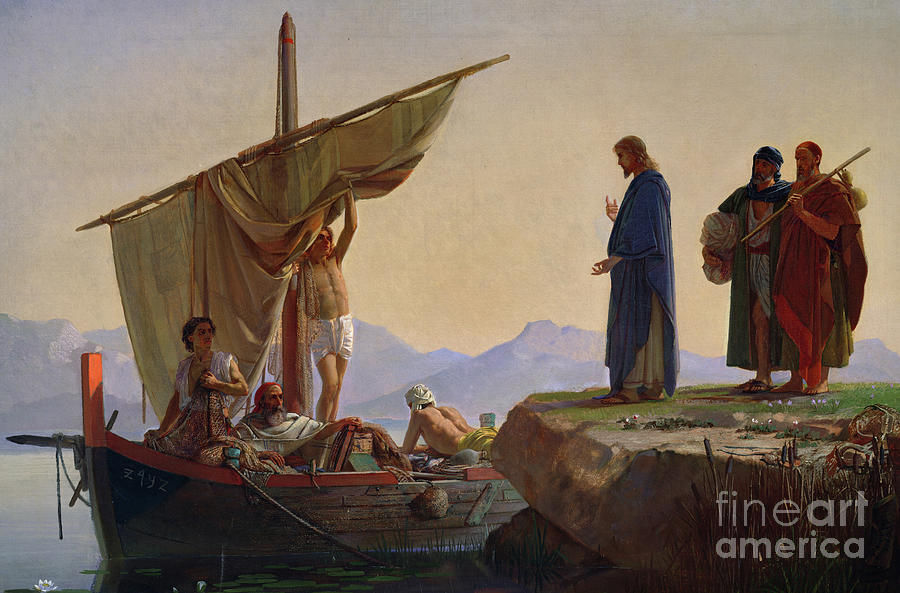
Let's be clear: The Apostles did not just just avoid investment in transportation; they gave their vehicles away. They abandoned them. They sacrificed the transportation they owned. Case in point: Four of the Apostles owned valuable fishing boats, but left them behind to follow Jesus.
Immediately they [John and James] left the boat and their father, and followed him (Matthew 4:22).
When they [Simon, Andrew, John, and James] had brought their boats to land, they left everything and followed him (Luke 5:11).
The abandonment of boats, the "lift" Philip got from the Spirit in lieu of a chariot ride, and the Palm Sunday donkey were not accidents. On the contrary, they were calculated and intentional. Jesus and the Holy Spirit proved in impressive fashion that the Church must not trust in transportation. We can fulfill our mission without an investment in vehicles.
In fact, Jesus sent the Twelve and then the Seventy with the express order that they were to take no resources at all--no money, no extra clothes, and no extra rations of food! Here's what the Lord commanded the Twelve when they were first sent out to evangelize:
And he said to them [the Twelve Apostles], ‘Take nothing for your journey, neither a staff, nor a bag, nor bread, nor money; and do not even have two coats each’ (Luke 9:3; NASB).
He did the same with the Seventy. One chapter later, the Bible tells us:
Now after this the Lord appointed seventy others, and sent them out two and two ahead of him to every city and place where he himself was about to come... ‘Carry no money belt, no bag, no shoes…’ (Luke 10:1, 4; NASB)
The apostles Jesus sent out were allowed to wear sandals, but he did not let them carry an extra pair. A remarkable commitment to simplicity and a total dependency on God, right? Jesus' point was and still is that the Church's power is not in material resources.
We are not to invest in transportation resources because walking worked. Jesus' disciples learned that quickly, and they didn't complain. You never read in the Bible the Apostles say: "Hey, Jesus, with all the offerings we're collecting, why don't we hire some horses or a wagon?"

The Walk to Antioch
Now, let's reflect on how long it took to cover distances in the days of the Apostles. An excellent point of comparison is the distance between Jerusalem and the ancient city of Antioch. There are good reasons to develop an appreciation for the distance between Jerusalem and Antioch. First of all, the first Christian church in all human history (Jerusalem, which can be called the “Mother” of Christian churches everywhere), suffered intense persecution and was scattered.
No worries, God used the scattering of the Jerusalem church for good. Other regions (such as Phoenicia), islands (such as Cyprus), and cities (such as Antioch) got evangelized by the believers who fled Jerusalem. Jesus' "Great Commission" that the Apostles should be witnesses 'in Jerusalem, Judea, Samaria, and unto the uttermost parts of the Earth' got its impetus through the scattering.
Here’s how the Bible frames it:
… on that day [the day Stephen was martyred] a great persecution began against the church in Jerusalem, and they were all scattered throughout the regions of Judea and Samaria, except the Apostles (Acts 8:1).
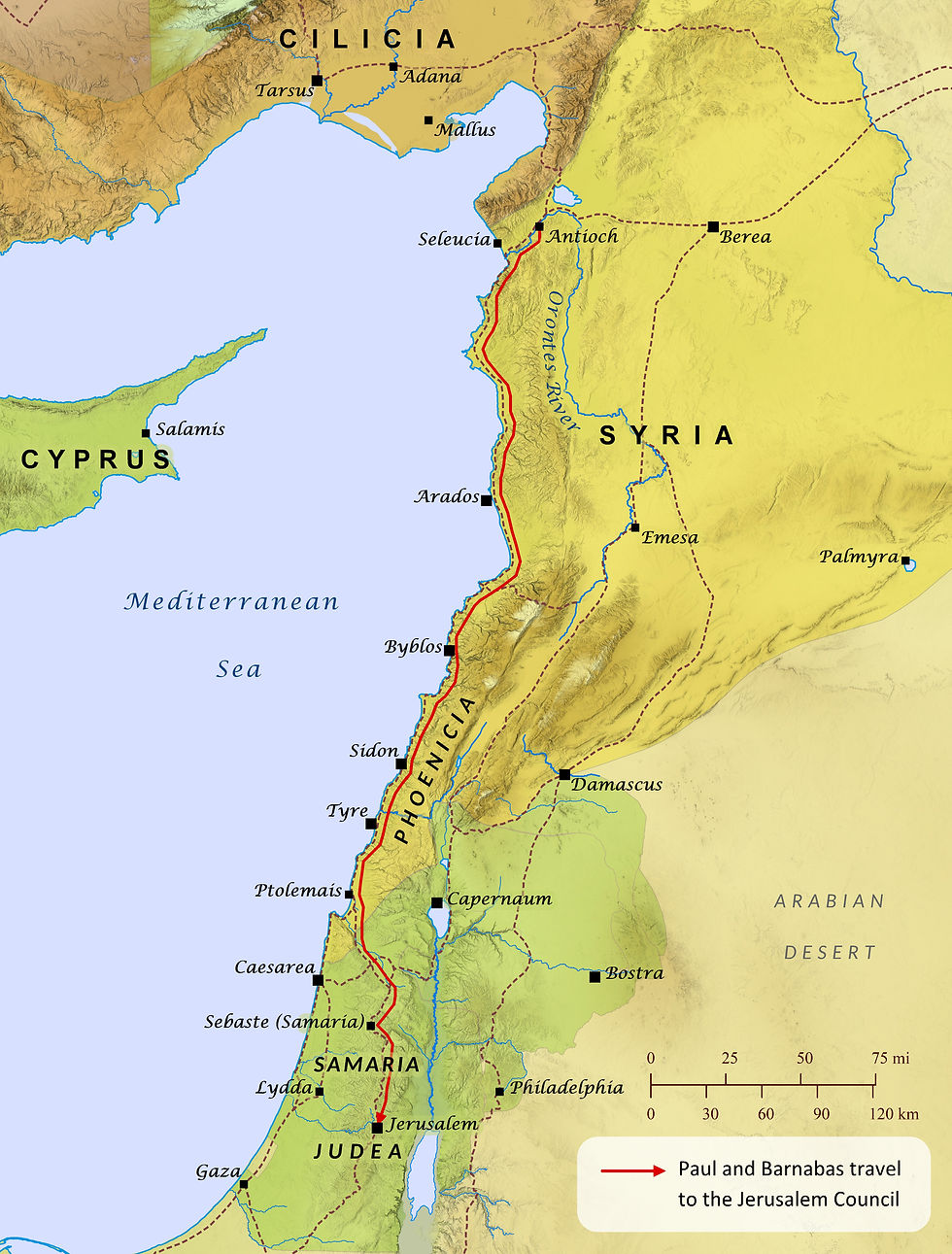
So then those who were scattered because of the persecution that occurred in connection with Stephen made their way to Phoenicia and Cyprus and Antioch, speaking the Word… (Acts 11:19)
It was then that Antioch became a very strategic place in the evangelization of the World. Not only was it the furthest distance the initial thrust of global missions reached by Acts 11, but Paul’s famous evangelistic push towards the Mediterranean world, getting as far as Spain (Romans 15:23–24, 28), would be launched from Antioch.
And, most importantly for our study right now, Antioch became important because of the leadership it produced. A Church father named Ignatius became the lead elder at the church in Antioch after Paul died. He was the following generation's heir of Paul's leadership. We’re going to examine Ignatius’ powerful theology--one which had the same conviction and clarity regarding the Trinity as the Apostles--but that will have to wait till next week. Needless to say, he died for his convictions.
Geopolitical Context
Antioch today is nothing but ruins. You can locate it on a map in the southernmost region of central Türkiye, near the Syrian border. It’s rubble today, but during the times of the Apostles it was the capital of the Roman province of Syria and had a population of approximately 300,000 residents, making it the third largest city in the Roman Empire. The only cities larger than Antioch were Rome (with 1 million people) and Alexandria, Egypt (with about 500,000 inhabitants). Antioch grew large as it was the gateway from the Mediterranean to the eastern trade routes such as the Silk Road.
King Seleucus ruled the Seleucid Empire, which had its administrative heart and capital in Syria and he built Antioch as its capital, naming it after his father (Antiochus) around 300 BC. Seleucus was one of the seven primary generals and successors of Alexander the Great--those men are commonly called the Diadochi (Successors), and they consisted of all the rival Macedonian generals and warlords who fought over Alexander’s empire after his death in 323 BC.
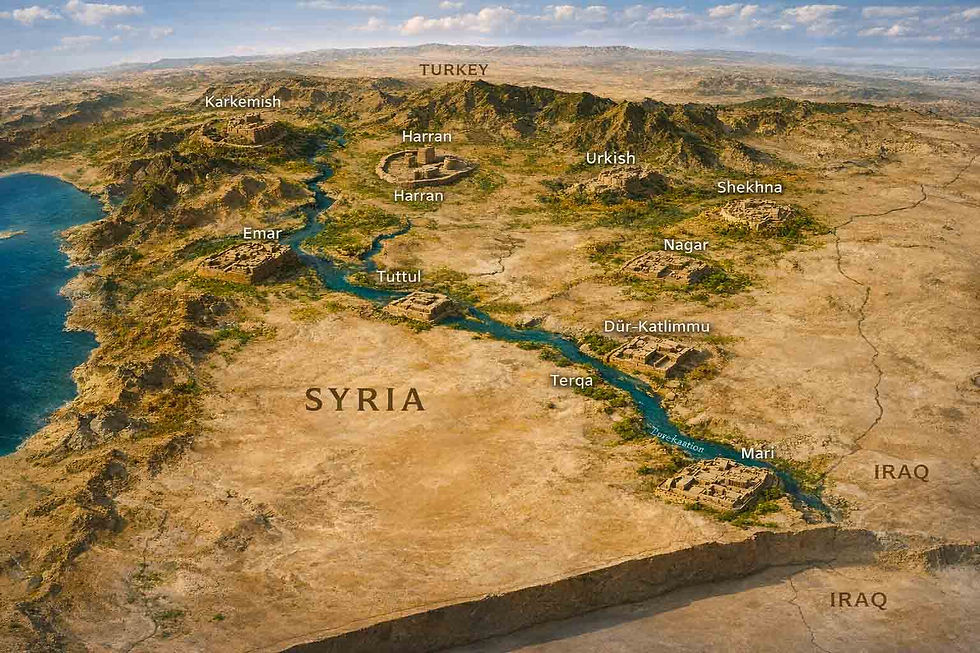
Seleucus built Antioch close to the Orontes River and strategically strengthened and fortified it to make the Seleucid Empire great. Antioch was later incorporated into the Roman Empire when the famous Roman General Pompey conquered Syria in 64 BC. He kept Antioch the capital of the region of Syria.

The Church in Antioch
Back to the Church in Antioch--We know that the beloved apostle Barnabas traveled to Antioch from Jerusalem somewhere near 42 AD because the Bible tells us so. It says:
Now those who had been scattered by the persecution that broke out when Stephen was killed traveled as far as Phoenicia, Cyprus, and Antioch, spreading the Word only among Jews.
Some of them, however, men from Cyprus and Cyrene, went to Antioch and began to speak to Greeks also, telling them the Good News about the Lord Jesus. The Lord’s hand was with them, and a great number of people believed and turned to the Lord.
News of this reached the church in Jerusalem, and they sent Barnabas to Antioch. When he arrived and saw what the grace of God had done, he was glad and encouraged them all to remain true to the Lord with all their hearts. He was a good man, full of the Holy Spirit and faith, and a great number of people were brought to the Lord (Acts 11:19-24).

Support from the Mother Church
So, Antioch got a church, the second major Christian center in history! The first church ever was in Jerusalem, but the second one the Bible calls a "church" was Antioch. We just read how that church began to grow through the evangelistic efforts of Jewish believers from Cyprus and Cyrene who were members of the "mother" congregation in Jerusalem. Notice how even Peter and John's affirmation of new converts in Samaria was needed back then (see Acts 8).
The point is that Antioch became the second major church community in Christian history—rising as a vibrant center of apostolic faith while places like Damascus, Samaria, Ethiopia, Cyprus, and Phoenicia were converting to Christ and forming local congregations of notoriety. We deduce that since the Bible doesn't give much focus on the church communities in those other locations, that they were being developed by the Holy Spirit. He worked most powerfully through the believers who were original members of the famed Jerusalem church of Acts 2-7.
The Bible story highlights how the Jerusalem congregation sent Barnabas to encourage the believers in Antioch. When he saw the work expanding, and noting that the Twelve Apostles were busy in Jerusalem, he knew that Paul would be useful for building people up. So, Barnabas took the 10-day journey northwest to Tarsus to get Paul and plug him into the church in Antioch. The two of them spent a full year teaching the believers in Antioch.

Here’s the continuation of the Bible story we started:
Then Barnabas went to Tarsus to look for Saul, and when he found him, he brought him to Antioch. So for a whole year Barnabas and Saul met with the church and taught great numbers of people. The disciples were called Christians first at Antioch (Acts 11:25-26).
A True Christian
It was in that congregation, the one where believers first were called "Christians," that Ignatius rose up. He liked to address that matter of deserving the name Christian, so we'll conclude today's lesson with two statements he made regarding what it means to be called a Christian. Here's what he wrote:
It is right, therefore, that we not just be called Christians, but that we actually be Christians (Magnesians 4:1).
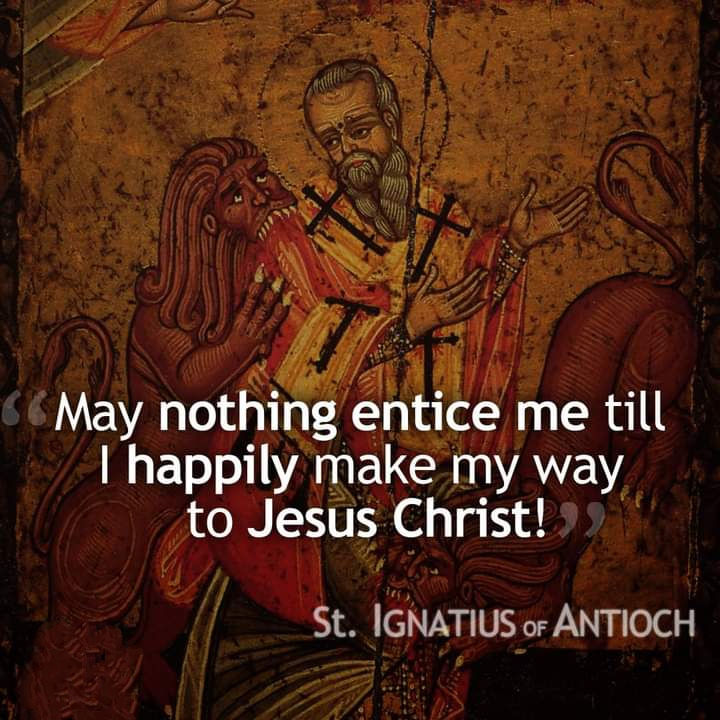
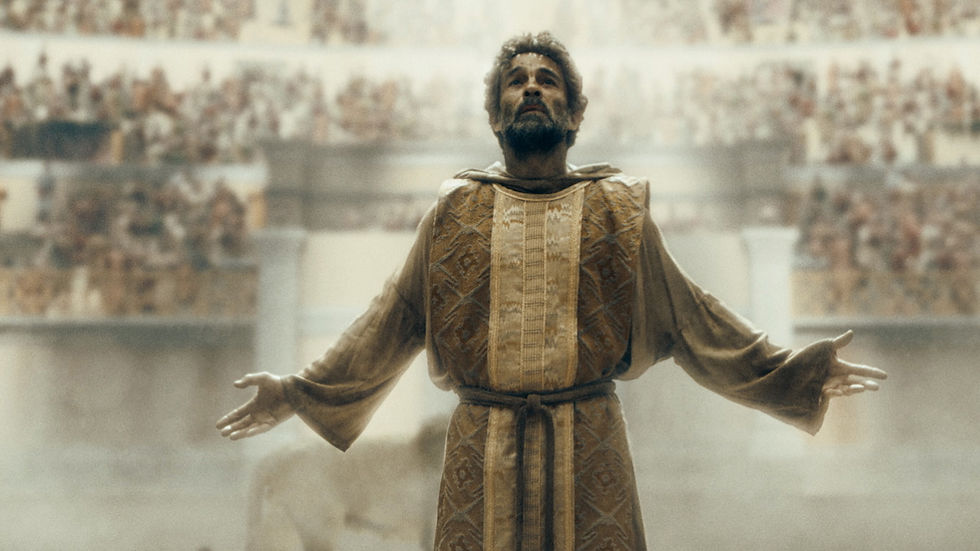
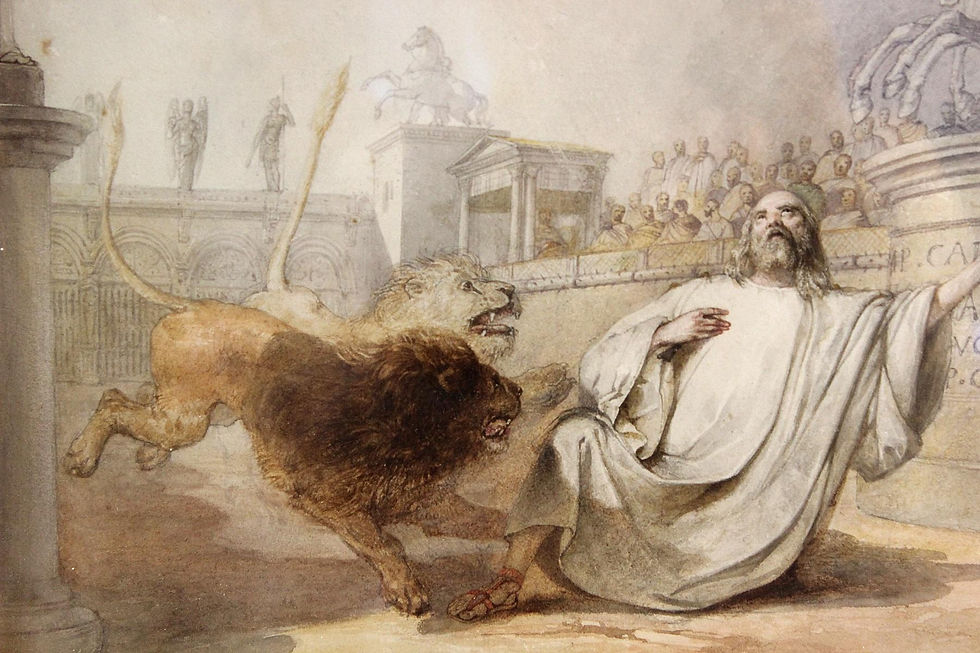
Ignatius wrote his letters on his way to the Coliseum in Rome where he would be fed to the lions. He would become a martyr, but he knew his own human frailty. So, he expressed a humble need for the prayers of believers to give him the strength to be faithful and to deserve the name "Christian."
He wrote:
Only pray for me that I may have inward and outward strength, so that I may not only talk about it, but want to do it; that I may not merely be called a Christian, but actually prove to be one. For if I prove to be one, I can also be called one (Romans 3:2).


Great teaching!